
April in Minnesota is an exciting time for bird feeders. The snow is finally starting to melt, with regular birds stopping by and some new, early migrants.
Over the past few weeks, I’ve been watching five visitors come and go from my tube feeder, hopper feeder, and suet cage, and each one has a little story to tell about the season shifting around us. If you’re just getting into backyard birding or thinking about putting up a feeder, this is a great time to consider starting! Here’s what I’m seeing right now.
Disclaimer: Some links found on this page might be affiliate links. If you click an affiliate link and make a purchase, I might earn a commission. As an Amazon Associate I earn from qualifying purchases.
1. Northern Cardinals
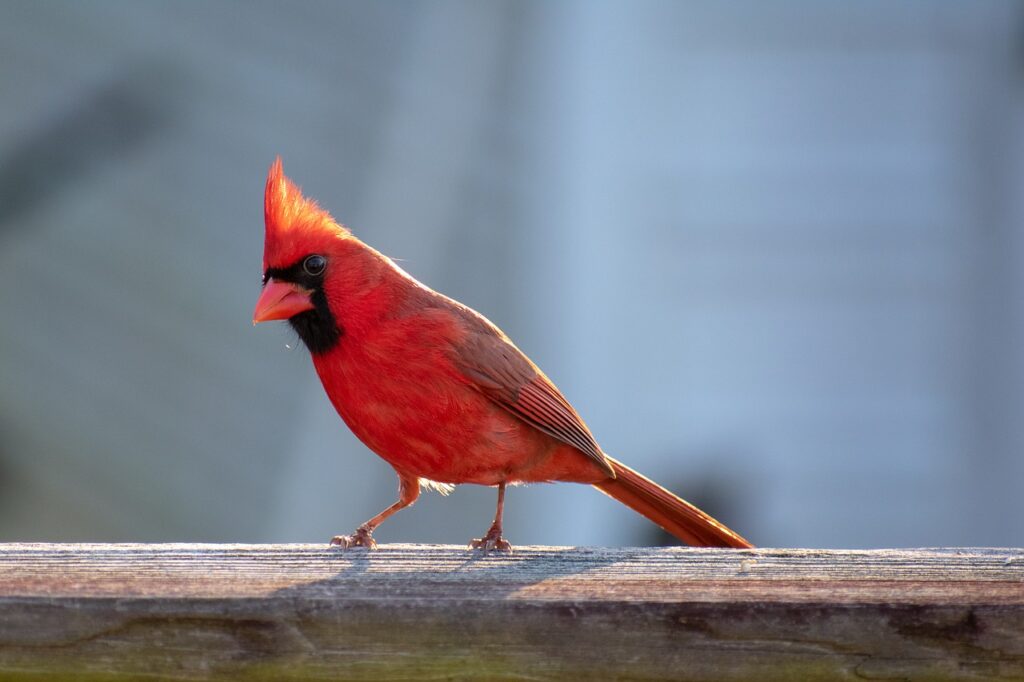
Few things stop me like a male Northern Cardinal landing on my bird feeder. (They do rank #1 in my bird power rankings for a reason).
Cardinals are well established in the Twin Cities and across southern and central Minnesota. Check the Cornell Lab range map for Northern Cardinal to see exactly where they appear near you. They’re year-round residents in their range, but April brings something extra fun: Courtship. Earlier this month I watched a male pick up a sunflower chip from a hopper feeder and pass it directly to a female perched nearby. That behavior, called “mate-feeding,” is a well-documented part of Cardinal courtship and pair bonding early in the mating season, according to Audubon’s Northern Cardinal profile.
Cardinals tend to visit in waves rather than staying put. I see them early morning and again late afternoon, either solo or as a pair. They strongly prefer sunflower seeds and millet, so my sunflower chips and white millet no-mess mix keeps them coming back reliably. Be sure to get a bird feeder with larger perches and places to sit to support a Cardinal’s weight. They’re larger than some other songbirds.
Related Content: Review: A Quality Bird Seed Cardinals Will Love
2. American Goldfinches
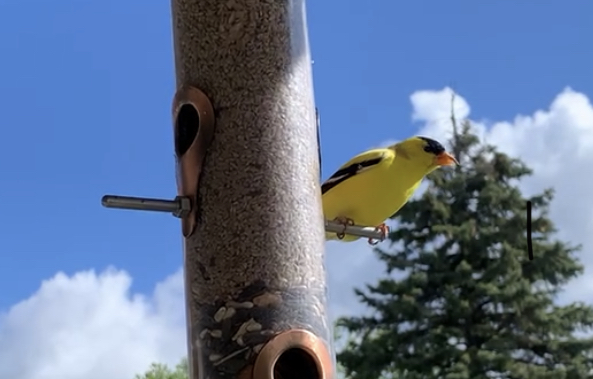
The American Goldfinch is basically a color barometer for spring. In winter, males are a drab olive-yellow. By April, they’re cycling into their breeding plumage and that bright yellow starts breaking through. When I see a fully lit-up male Goldfinch on the tube feeder, I start to stop worrying about whether warm weather is actually coming.
Cornell Lab of Ornithology’s All About Birds notes that Goldfinches are among the latest nesters in North America, often waiting until mid-summer when thistle and milkweed seeds are abundant. For now, in April, they’re regulars at the feeder and still stocking up.
They’re particularly drawn to nyjer (thistle) seed, but I’ve found they also work through sunflower chips. A tube feeder is ideal for them.
Related Content: 4 Tips for Bringing American Goldfinches to your Yard
3. Downy Woodpeckers
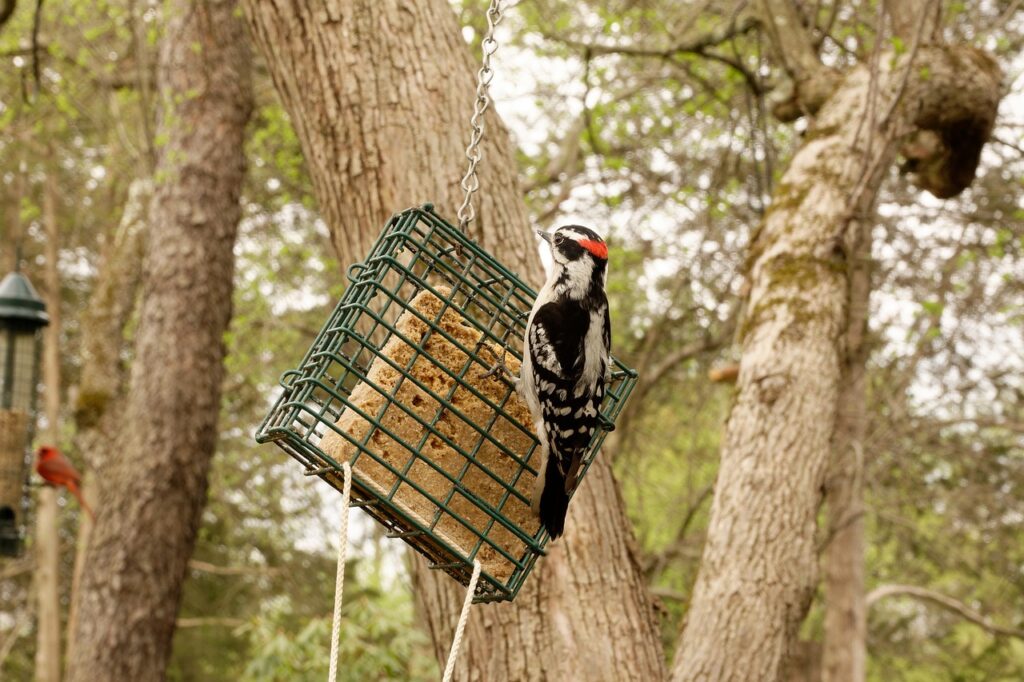
The Downy Woodpecker is the smallest woodpecker in North America and usually one of the most consistent visitors at my bird feeders. They’ve been a little less frequent at my suet cage this April, and honestly I think I know why: Several neighbors have recently set up their own suet feeders. More competition, but hard to be upset about more people exploring this hobby!
Downy Woodpeckers are year-round residents throughout Minnesota. According to the Minnesota Department of Natural Resources bird guide, they’re cavity nesters and highly adaptable to suburban and urban environments, which is part of why they’re such a reliable backyard bird.
Suet is the move for bringing them to your yard. My block of peanut suet in the cage feeder is what brings them in most consistently when they do show up.
4. Chipping Sparrows

If you hear a long trill coming from a shrub or low branch this month, stop and look. It could be a tiny Chipping Sparrow, and it’s a satisfying April arrival. These are migratory birds returning to Minnesota for the breeding season, and their rusty “cap” (I like to call it their hat) and clean gray breast make them easy to pick out once you know what you’re looking for.
The Cornell Bird Lab describes the Chipping Sparrow as a common Sparrow in North America during summer. They tend to forage on or near the ground, so I see them often working around the base of the hopper feeder picking up spilled millet. That’s actually a good reason to let a little seed fall rather than sweeping up right away.
They’re an underrated bird. Easy to overlook next to a Cardinal or a Goldfinch, but once you key in on them, you’ll notice them everywhere in April.
5. Red-Winged Blackbirds
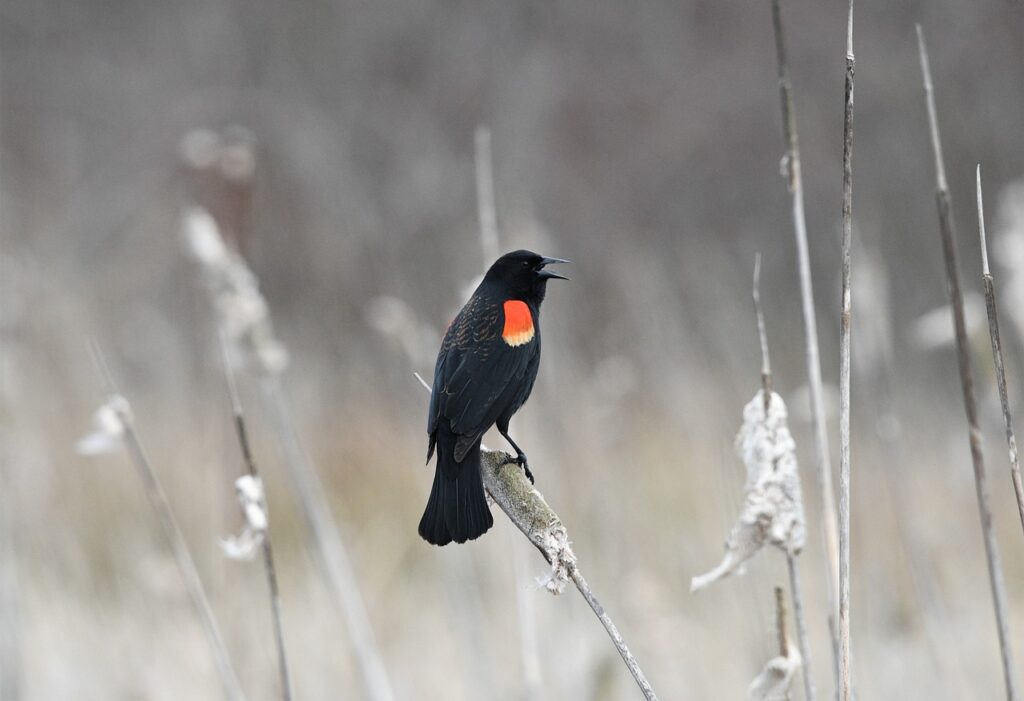
The Red-winged Blackbird might be the most reliable seasonal signal in the entire Minnesota bird calendar. That distinctive “conk-la-ree” call carries across a yard and demands attention. It’s a sure sign that spring is on the way (they usually arrive early before other migratory birds).
Males arrive before females and set up territory aggressively. Believe me: I had one swoop down and attack my hair while I was running one time. Annoying.
The Audubon Society’s profile on Red-winged Blackbirds notes they’re abundant birds in North America, and in April in Minnesota you’d better believe it. They’re bold at the feeder and will displace smaller birds temporarily, I tend to notice them moving on and not staying for long periods of time.
They go after millet and cracked corn readily, so my no-mess mix pulls them in. If you get a surge of them, they’ll be vocal and a little domineering for a stretch, but they shouldn’t be a long term annoyance.
Putting Up a Feeder? April Is a Great Time

April is a great time to start bird feeding. Birds are moving around for the mating season, migrants are coming in or on the way in May (stay tuned), and actively looking for food sources. A simple tube or hopper feeder with a good no-mess seed mix (like this one I use) and a suet cage will get you a ton of species visiting without much commitment. You don’t need the perfect setup on day one.
If you want a fuller breakdown of Minnesota birds coming to feeders and what time of year they tend to visit, I recommend you check out my detailed guide with more than 30 species here.
Spring in a Minnesota backyard is genuinely one of the better free shows available. These five birds are the opening act. Just wait until May!