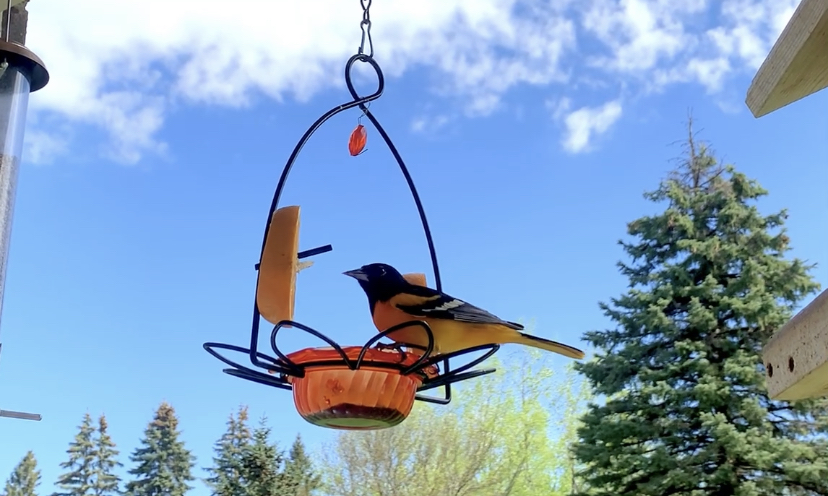
The shift from winter to spring feeding isn’t a teardown. It’s about layering: Keep the staples, add in some new ingredients, and boom! You’re set to get Orioles, Hummingbirds, Rose Breasted Grosbeaks and more coming to your yard.
Here’s how I’m doing it this year.
Disclaimer: Some links found on this page might be affiliate links. If you click an affiliate link and make a purchase, I might earn a commission. As an Amazon Associate I earn from qualifying purchases.
When should you transition your bird feeders from winter to spring?
Start adding spring foods in April. Have full spring setups up by May in northern climates. In their northern breeding range, Baltimore Orioles tend to arrive in late-April or early-May. Ruby-throated hummingbirds also arrive in May.
Keep your winter setup running
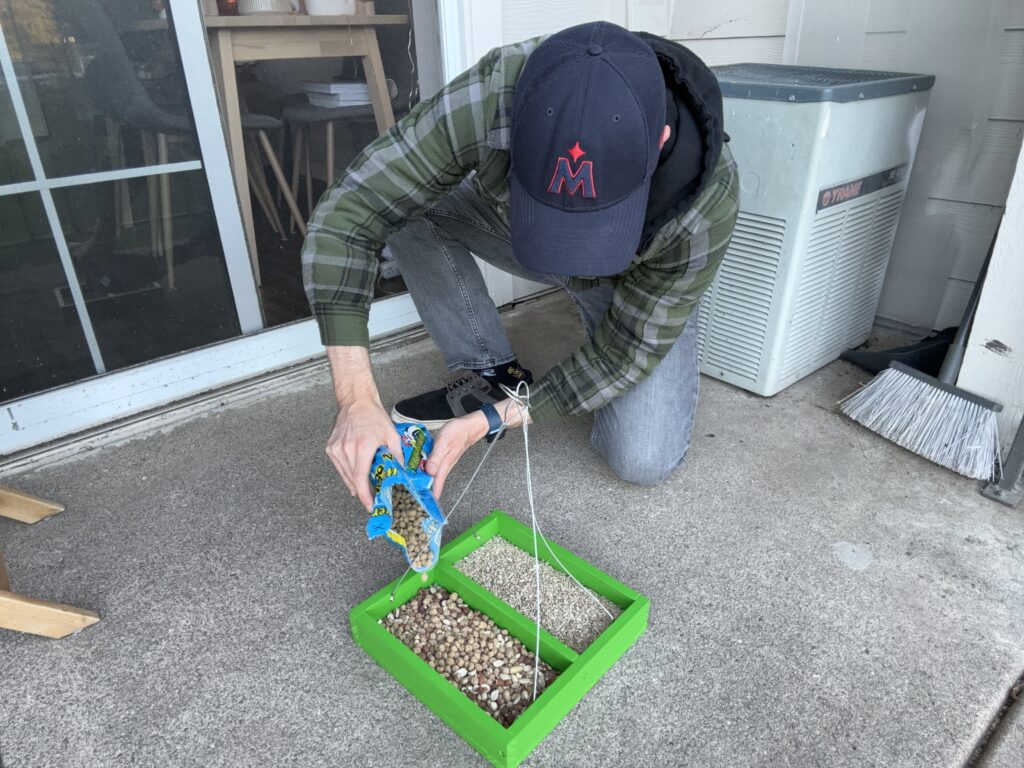
My winter feeders stay up. You don’t need to change out the classics: Black oil sunflower seeds, suet, and peanut bits. These give birds the fat content they need, and you’ll keep pulling in Chickadees, Nuthatches, Sparrows, and Cardinals well into spring. Safflower Seed is another solid option if you want to deter squirrels and grackles.
According to the Cornell Lab of Ornithology, black oil sunflower seed is the favorite for a ton of birds that visit feeders. No reason to pull a winter staple that’s still working.
Source: Cornell Lab of Ornithology, Project FeederWatch
What I’m adding this spring
There are three major additions I make in the spring
- White millet mixed in with sunflower chips: This helps draws in migrants and ground-feeders: Sparrows, late Dark-Eyed Juncos, Indigo Buntings.
- Adding a fruit mix and/or mealworms: Attracts a variety of species like Bluebirds and many others.
- Oriole and Hummingbird feeders in May: More on the timing below.
Related Content: Beyond Hummingbirds: 4 Other Birds That Drink Nectar
Get Oriole and Hummingbird feeders up early

If you wait until you see a Baltimore Oriole to put your feeder out, you’ve probably missed your shot.
Orioles are looking for reliable energy sources during or wrapping up their migration. If they don’t find feeders in your yard upon their initial spring arrival, they most likely won’t use them later. Get feeders up several weeks before expected arrivals.
Timing by region:
- Upper Midwest (MN, WI, IA, Dakotas): May 1
- Mid-Atlantic: late April
- Gulf Coast and Southeast: late March to mid-April
A few practical notes:
- Offer oranges and grape jelly together. Halve an orange on a feeder peg. Put a tablespoon or two of grape jelly in a small dish. Skip jellies with corn syrup or artificial sweeteners.
- Hummingbird nectar is 4 parts water to 1 part white sugar, no dye. Boil, cool, fill. Change every few days.
- Leaving feeders up doesn’t delay migration. Audubon confirms migration is triggered mainly by day length rather than food availability.
Source: Audubon, Guide to Attracting Hummingbirds and Orioles
The Oriole feeder I use is here. My Hummingbird feeder is here.
The transition checklist
- Keep sunflower, suet, and peanut feeders up.
- Add white millet or a millet blend.
- Introduce a fruit mix in April.
- Clean every feeder before adding spring foods. Hot water, stiff brush, 10% bleach solution. Dry completely.
- Hang Oriole and Hummingbird feeders by May 1 in the northern tier.
- Keep your birdbath full. Moving water (a dripper or small fountain) pulls in species that don’t visit feeders. Every bird needs water!
Why it’s worth it
Winter feeding is steady. The same Chickadees, the same Nuthatch, the same Cardinal pair. Spring is different. Many of the species passing through during spring migration — Orioles, Grosbeaks, Hummingbirds, Indigo Buntings, Tanagers, are at their most vivid in May.
A small change to your setup is the difference between watching them fly over your yard and watching them land in it and set up shop.
FAQ: Winter to spring bird feeder transition
Q: When should I take down my winter bird feeders? A: You don’t need to. Keep sunflower, suet, and peanut feeders running and add spring foods alongside them.
Q: What’s the best food to add for spring migrants? A: White millet, a fruit mix, grape jelly, orange halves, and sugar-water nectar.
Q: When should I put out my Oriole and Hummingbird feeders? A: Upper Midwest by May 1. Mid-Atlantic by late April. Gulf Coast and Southeast late March to mid-April. Always a couple of weeks before expected arrival.
Q: Will leaving my Hummingbird feeder up too long delay migration? A: No. Migration is triggered by day length, not food availability.
Q: How often should I clean spring feeders? A: Nectar feeders every couple days. Jelly dishes every 2-3 days. Seed feeders every couple of weeks.